

CompMS & Lipidomics
Univ.-Prof. Dr. Robert Ahrends
Robert Ahrends’ research centres on lipidomics, i.e. the understanding the roles of lipids within biological systems, particularly in relation to their interactions with proteins (enzymes) and metabolites. His work emphasizes a systems biology approach, integrating lipidomics with other omics strategies and advanced bioinformatics to unravel the complexity of lipid regulation and function in health and disease.
Robert focuses on the analytical chemistry of lipids, developing and applying mass spectrometry-based methods and computational tools to enable comprehensive and quantitative lipid analysis. He is particularly interested in how disruptions in lipid metabolism contribute to diseases such as metabolic syndrome, diabetes, obesity, cardiovascular disease, and thrombocytopenia.
His group has pioneered efforts in standardizing lipidomics workflows and data formats, which are critical for reproducibility and the broader adoption of lipidomics in biomedical research.
Immunoanalytical and Molecularbiological Methods
Univ.-Prof. Dr. Margit Cichna-Markl
Margit Cichna-Markl’s research deals with the development and optimisation of immunoanalytical assays, which exploit the high selectivity of antibodies, and polymerase chain reaction (PCR) based assays, allowing the efficient amplification of specific regions of the DNA, to solve a variety of questions.
One application field we are interested in are genetic and epigenetic alterations associated with diseases, e.g. various types of cancer and rare diseases, and their suitability as diagnostic, prognostic and/or predictive biomarkers.
Another main application field we are dealing with is food authentication, in particular the identification and differentiation of species and cultivars in food products.

Bioanalysis
Univ.-Prof. Dr. Christopher Gerner
Christopher Gerner’s research interests in proteomics focus on applying advanced mass spectrometry-based techniques to study protein expression, modification, and function in health and disease, particularly in clinical contexts, e.g. cancer and chronic inflammation. He has developed and utilized diverse proteome profiling approaches to characterize cellular proteomes.
Christopher integrates proteomics with other omics data, especially fatty acid and oxylipin analysis, to understand molecular mechanisms underlying pathophysiology. He leads clinical proteomics efforts, employing high-sensitivity mass spectrometry platforms and bioinformatics tools.
His research is characterized by the development and application of quantitative, high-resolution mass spectrometry techniques to map proteome dynamics, identify disease-related protein signatures, and support clinical biomarker discovery and validation.
Mass Spectrometry Centre Laboratory
Dr. Ronald A. Glabonjat
Ronald Glabonjat’s research advances Metallomics and elemental speciation analysis, revealing how chemical forms of trace elements, including arsenic, selenium, zinc, and copper, affect biological function, environmental transformations, and human health. He develops cutting-edge mass spectrometry methods, pioneering simultaneous elemental and molecular analyses to provide deeper analytical insight.
As Director of the Mass Spectrometry Centre at the Faculty of Chemistry, University of Vienna, Ronald’s Central Core Lab provides fee-for-service analyses, independent instrument access, collaborative method development, and consulting services for a wide range of applications, from single atom quantification to intact protein characterization. The core supports studies in qualitative and quantitative molecular determinations, Metallomics, elemental speciation analysis, and related fields, integrating advanced MS workflows to deliver high-quality, reproducible data. By combining state-of-the-art instrumentation with flexible, user-centered services, the laboratory empowers local and international researchers to address complex questions in biology, environmental science, and public health.
Koellensperger Lab
Univ.-Prof. Dr. Gunda Köllensperger
Gunda Köllensperger’s research is distinguished by her pioneering work in both metabolomics and metallomics, with a strong focus on developing innovative analytical methods to explore the molecular complexity of biological systems.
Her group focuses on both targeted quantification and non-targeted identification of small molecules, employing state-of-the-art liquid chromatography and mass spectrometry platforms to achieve high metabolite coverage and sensitivity.
Gunda is recognized for pioneering the use of 13C-isotopically labelled biomass extracts as internal standards, which facilitates standardization and quantitative reliability of metabolomics analyses.
In metallomics, she aims to elucidate the identity, distribution, and dynamics of metals and metalloids in biological systems. In this area, her group is particularly interested in single-cell analysis, imaging of elemental distributions in tissues and tumours, and understanding the role of drugs in cancer therapy.
Computational Multiomics
Ass.-Prof. Dr. Dominik Kopczynski
Dominik Kopczynski’s research aims to bridge the gap between rapidly advancing mass spectrometry technologies and the lack of specialized, powerful software.
His long-term vision is a multi-omics platform for biological classification that will enable researchers to compare, store, and apply classification models from different areas of biology. Such a platform could significantly accelerate research and reveal biological connections at unprecedented speed. It has the potential to have a decisive impact on global health by enabling better monitoring of individual health conditions or the early detection of diseases such as cancer or neurodegenerative disorders.

Drug Modes of Action
Assoz. Prof. Dr. Samuel Meier-Menches
Samuel Meier-Menches’s research focuses on chemoproteomics-driven approaches to understand and advance drug discovery. He specializes in developing and applying proteomic strategies to identify and validate the protein targets of investigational and clinically relevant therapeutic agents, moving beyond traditional cytotoxicity to uncover mechanisms of action at the molecular level.
A central aspect of his work is the use of dose-dependent chemoproteomics to deconvolute the polypharmacology of drugs, especially covalent modifiers and metal-based drugs. Samuel employs a variety of affinity- and label-based techniques to map interaction landscapes of candidate drugs, supporting the rational design and clinical translation of new therapeutic agents.
His research integrates chemoproteomics, analytical chemistry, and drug discovery to elucidate novel drug targets and mechanisms, with the goal of developing more effective and selective therapies.
Rampler Lab
Ass.-Prof. Dr. Evelyn Rampler
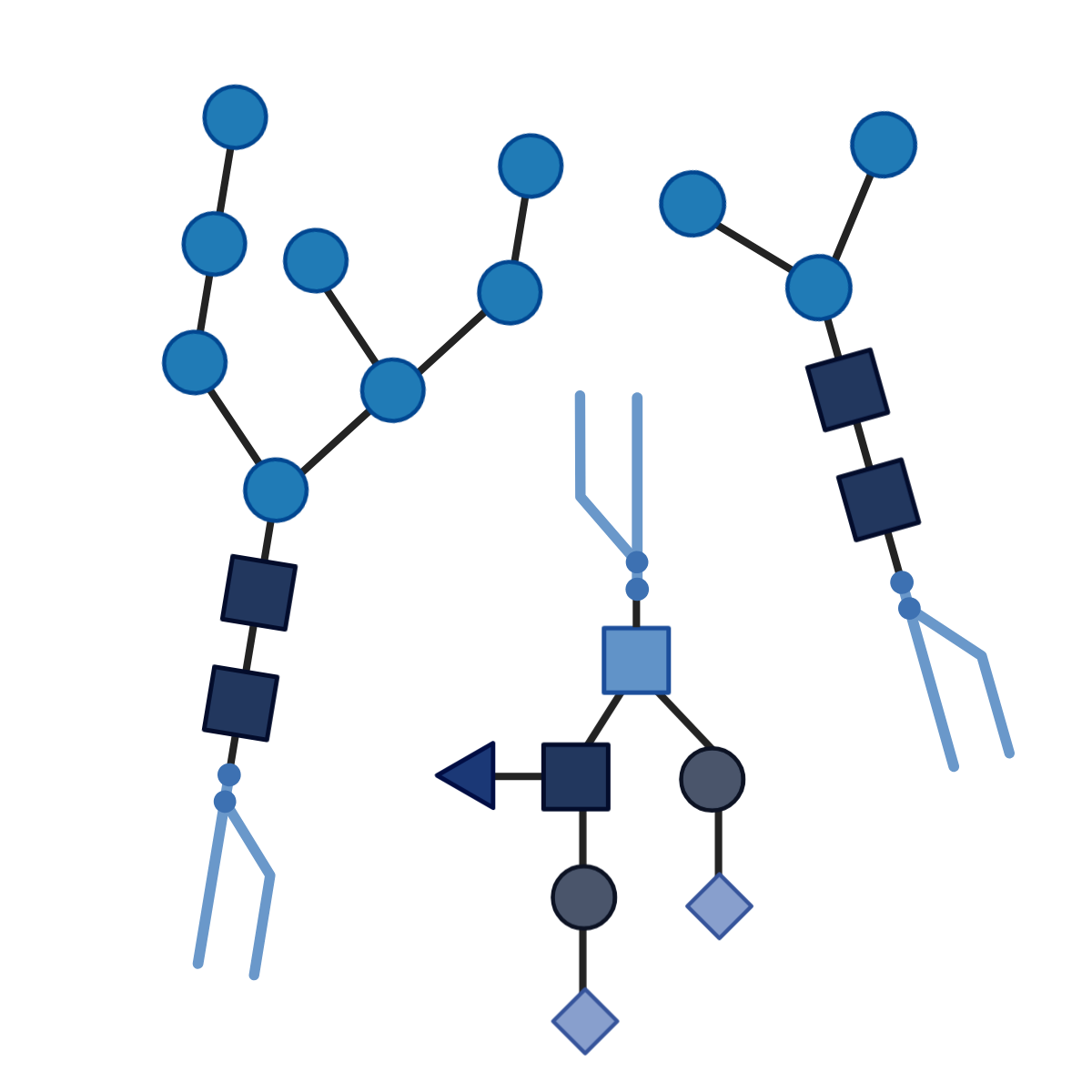
Evelyn Rampler’s research focuses on the development and application of advanced analytical workflows to characterize the structural diversity and biological roles of glycolipids, especially gangliosides.
Her group specializes in creating sensitive, high-throughput mass spectrometry and liquid chromatography methods that enable comprehensive profiling and quantification of glycolipid species at both the glycan and lipid moiety levels. A significant aspect of her work involves overcoming the analytical challenges posed by the complexity of glycolipids, which arise from the vast combinatorial diversity of their glycan and lipid components.
Evelyn has introduced novel strategies for automated, in-depth annotation of glycolipid species, leveraging open-source data evaluation tools and decision rule sets to achieve detailed structural elucidation. By advancing these methodologies, she aims to unravel the functional significance of glycolipids in cellular processes and disease.
Biochemical Network Analysis
Univ.-Prof. Dr. Jürgen Zanghellini
Jürgen Zanghellini’s research is dedicated to understanding and modelling the complex architecture and dynamics of biological systems, with a particular focus on metabolic networks. His work combines computational biology, mathematical modelling, and systems biology to analyse how the structure and regulation of biochemical networks give rise to cellular functions.
A central theme of his research is the development and application of computational tools for the analysis of biological networks. This includes constraint-based modelling approaches, such as flux balance analysis and elementary flux mode analysis, which are used to predict and optimize metabolic functions in microorganisms and microbial communities.
Jürgen is recognized for advancing high-performance computing methods that allow for the unbiased analysis of large-scale metabolic models, enabling the study of complex interactions within and between microbial populations.